R Madhwal Ukgoglobal.com
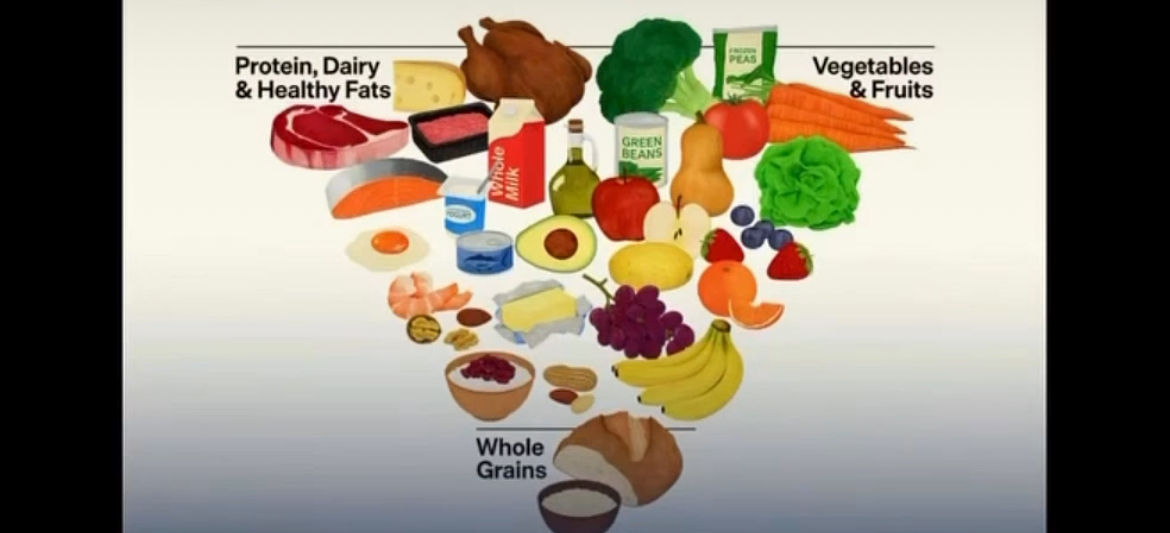
As swiftly as USA invaded Venezualla,it also flipped the food pyramid upside down,changing the nearly 60 years old dietary federal advises. So now grains are at bottom .On top are protein. the United States overturned its decades-old food pyramid, the change was presented as a scientific update. But viewed from India—and especially Uttarakhand—the shift feels less like innovation and more like a delayed recognition of what traditional diets already knew.
For nearly 60 years, global nutrition advice—shaped largely by U.S. policy—promoted a grain-heavy, low-fat, moderate-protein model. India absorbed this thinking through institutions, public health messaging, school meals, and food subsidies. The result: calories increased, nutrition did not.
What the Old Model Did to Indian Diets
Under the influence of grain-centric guidelines:
-
- Rice and wheat became dominant, even in regions that traditionally relied on millets
-
- Protein was treated as optional or “luxury”
-
- Fats—especially animal fats—were culturally and medically demonized
-
- Quantity replaced quality in public nutrition programs
-
- Pure Ghee was treated cholesterol inducing.
The American Flip: Why It Validates Ancient Indian Wisdom
The new protein-forward, fat-tolerant framework emerging from the West quietly confirms three truths India’s diet always embodied:
1. Protein is foundational
For muscle strength, metabolic health, immunity, and aging populations—especially important in hill regions where physical resilience matters.
2. Not all carbohydrates are equal
Millets behave nothing like refined wheat or polished rice. Treating them as “just carbs” was a policy error.
3. Fat is not the enemy
Traditional fats—ghee, curd fat, seed oils—were consumed in moderation, not excess. The problem was industrial fats, not cultural ones
The Deeper Irony
America flipped its food pyramid after creating a health crisis. 38 percent of USA teens are diabetic despite it spending equal to all other counteries on health care. They say it is existential crisis for their country. Young men sperm count has become half!
India abandoned its food wisdom before creating one.
Now, as Western science rediscovers protein, fiber, and fat balance, Indian communities are being asked to “revive” what they were encouraged to forget.
The Real Lessons for India
If put into daily practice, what the latest shift in U.S. dietary advice is really telling Indians is not to imitate Western food trends—but to stop abandoning our own lived wisdom.
-
That a paratha made in ghee (not refined oil), paired with eggs, is still a far superior choice to boxed cereals, white bread, or processed meats like salami and sausages.
-
That two meals a day—ideally finishing the second before sunset— is not deprivation but intelligent insulin management, an idea deeply embedded in Indian tradition.
-
That skipping lunch—even if it is free
— may be metabolically wiser than forced, habitual eating.
-
That with dietary fat rehabilitated and cholesterol panic fading, a freshly made samosa is far less harmful than a fast-food burger containing an ultra-processed chicken patty.
-
That A2 bilona ghee is not nostalgia—it may well be among the world’s most complete traditional superfoods.
-
That grains should be progressively replaced by millets, not eliminated but re-balanced.
-
That the era of ideological eating is fading—unprocessed meat, poultry, eggs, and dairy are returning to the top of the food chain, not despite science, but because of it.
-
That three carbohydrate-centric meals a day, a habit ingrained over decades, is increasingly proving disastrous for metabolic health.
-
That recommended protein intake has effectively doubled—forcing a serious question for Indians: where will this protein come from, and in what form?
-
That with nearly 4 out of 10 Indians now insulin-resistant, India has quietly become the diabetes capital of the world—a crisis revealed by longer lifespans but created by nutritional drift.
-
And finally, that the solution to this modern epidemic will not come from imported fads or packaged “health foods,” but from society itself—by re-engaging with ancient Indian wisdom, seasonal eating, local foods, and restraint rooted in culture rather than calorie charts.
This is not a call to eat more.
It is a call to eat wisely—again.